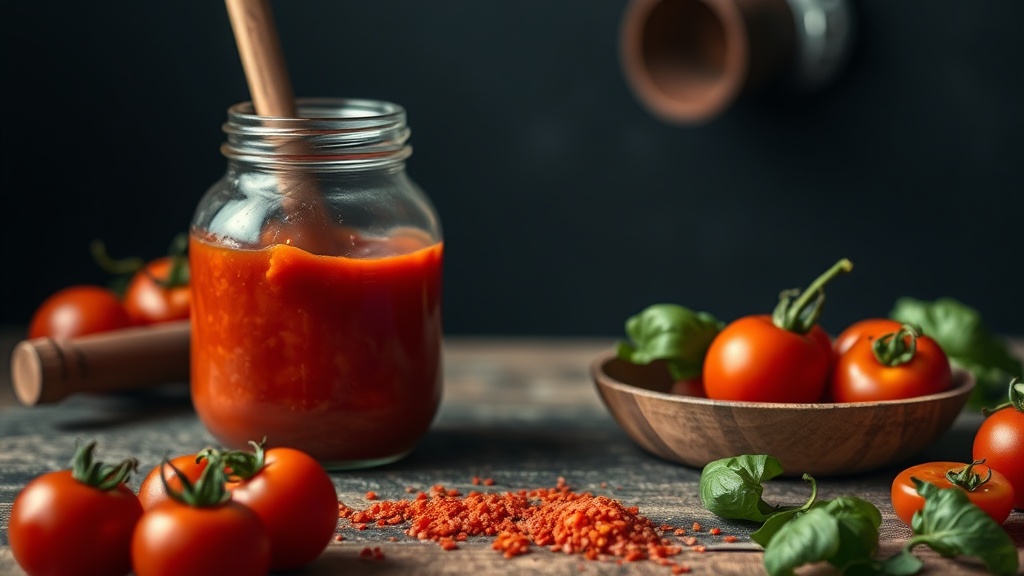
Why Does Your Tomato Sauce Turn Out Bitter? The Tool You're Probably Missing

Have you ever spent hours simmering a pot of tomato sauce on the stove—only to taste it and wonder why there's a lingering sharpness that won't go away? You added salt. You balanced the acid with a pinch of sugar. You even tossed in that parmesan rind you'd been saving. And still, something tastes off. The culprit might not be your technique or your ingredients. It might be your tools.
Most home kitchens are stocked with blenders, food processors, and immersion blenders. They're workhorses, no doubt. But there's one humble tool that serious cooks (and professional kitchens) keep within arm's reach for specific jobs—and it's probably gathering dust in your grandmother's basement. That tool is the food mill. And once you understand what it does that no other gadget can, you'll wonder why you waited so long to add it to your arsenal.
What Is a Food Mill—and Why Isn't Everyone Using One?
A food mill is a kitchen utensil used to mash and sieve soft foods, separating the fine pulp and juice from the seeds, skin, and coarser pulp. Picture a shallow bowl with a flat bottom pierced with holes, sitting atop a tripod that straddles your mixing bowl or pot. Below the bottom plate sits a rotating blade that pushes food through the holes as you turn the crank.
Unlike a blender, which pulverizes everything into submission (seeds, skin, and all), a food mill discriminates. It extracts only the finest, smoothest portions of your ingredients—leaving the fibrous, bitter, or tough components behind. This isn't just about texture; it's about flavor.
Tomato seeds, for instance, contain a compound called tomatine that can lend a subtle bitterness to sauces. When you blend tomatoes whole, you're incorporating that bitterness directly into your finished dish. A food mill removes the seeds entirely. The same principle applies to apples for sauce, potatoes for gnocchi, or berries for seedless jam.
How Does a Food Mill Compare to a Blender or Food Processor?
This is the question most people ask when they first encounter a food mill. Why add another bulky item to your kitchen when you already own appliances that seem to do the same job?
The answer lies in what each tool produces. A blender creates a uniform emulsion—everything becomes one homogeneous texture. That's brilliant for smoothies or silky soups, but disastrous when you want to eliminate seeds or skin. A food processor chops and combines—but doesn't strain. You're still dealing with the entirety of your ingredients.
A food mill sits in a category of its own. It's a strainer and a masher working in concert. The result is lighter, smoother, and more refined than what a blender can achieve. Think about mashed potatoes: blend them and you get glue. Rice them and you get fluff. Mill them and you get something ethereal—airy, smooth, and completely lump-free without the overworking that leads to gumminess.
For sauces specifically, the difference is night and day. A tomato sauce passed through a food mill has a velvety, almost silky quality that clings to pasta beautifully. It tastes brighter, cleaner—because the bitter seeds and tough skins never made it into the final product. Serious Eats has extensive testing showing that food-milled tomato sauces consistently score higher in blind taste tests than their blended counterparts.
Which Tasks Actually Benefit from a Food Mill?
You don't need to haul out the food mill for every cooking task. But for specific jobs, it transforms the outcome from acceptable to exceptional.
Tomato and Fruit Sauces
We've covered tomatoes, but the same logic applies to apples, pears, berries, and stone fruits. Making applesauce? Quarter the apples (skins, cores, and all), simmer until soft, then pass through the mill. The skins and seeds stay behind; silky sauce emerges. The flavor is purer—no bitterness from seeds, no tough bits of skin.
Mashed Potatoes and Root Vegetables
Professional kitchens often use food mills for mashed potatoes destined for refined dishes. The texture is incomparable—light, almost cloud-like. It works beautifully for parsnips, turnips, and celery root too. If you're making a puree for a dinner party and want to impress, the food mill is your secret weapon.
Gnocchi and Dumplings
Traditional gnocchi recipes call for riced potatoes—because lumps ruin the delicate texture. A food mill achieves the same result (some would argue better) with less effort. The potatoes pass through as fine, dry strands that incorporate into flour without becoming dense or tough.
Soups and Bisques
Want that restaurant-quality bisque texture at home? After simmering your shellfish or vegetables, pass everything through the food mill. What returns to your pot is pure, intense flavor with a consistency that coats the back of a spoon perfectly. No fishing out bay leaves or stray herb stems—they get caught in the mill along with any tough fibers.
What Should You Look for When Buying a Food Mill?
If I've convinced you to add this tool to your kitchen, here's what to consider before purchasing.
Material matters. Stainless steel mills are more durable and easier to clean than aluminum (which can react with acidic foods). Plastic mills exist at lower price points, but they lack the heft and durability you'll want for regular use.
Disk options. Quality food mills come with interchangeable disks featuring different hole sizes. Fine holes work best for smooth sauces and baby food. Medium holes are your everyday workhorse. Coarse holes handle chunkier jobs or foods with more fiber.
Capacity and stability. Consider how much food you typically process. A larger bowl means fewer batches, but it also requires more storage space. Look for models with legs that hook securely over your pots or bowls—stability matters when you're cranking through pounds of tomatoes.
Ease of cleaning. This is where food mills vary widely. Some models disassemble completely for dishwasher cleaning; others require hand-washing. Check reviews for complaints about food trapped in crevices or rust-prone components. A tool that's difficult to clean won't get used, no matter how well it performs.
Brands like OXO, Cuisipro, and RSVP International make well-regarded models across various price points. You don't need to spend a fortune—expect to pay between $30 and $80 for a quality mill that will last years.
Is a Food Mill Worth the Cabinet Space?
Here's the honest truth: if you cook occasionally and stick to simple meals, you might not reach for a food mill often enough to justify the storage. But if you make tomato sauce from fresh tomatoes even a few times per year, if you prepare mashed potatoes for holidays, if you dabble in homemade gnocchi or fruit butters—the food mill earns its keep quickly.
It's not a gadget that tries to do everything. It's a specialized tool that does specific things better than any alternative. In an era of multi-function kitchen devices that promise to replace ten other appliances (and often fail at most of them), there's something refreshing about a tool with a singular, well-defined purpose.
The bitterness in your tomato sauce? The seeds you didn't know were causing it. The slightly grainy texture in your applesauce? The skin fragments your blender couldn't eliminate. These aren't failures of technique—they're failures of tools. And they're easily solved.
A food mill won't change your life. But it will change your sauce. Sometimes that's enough.