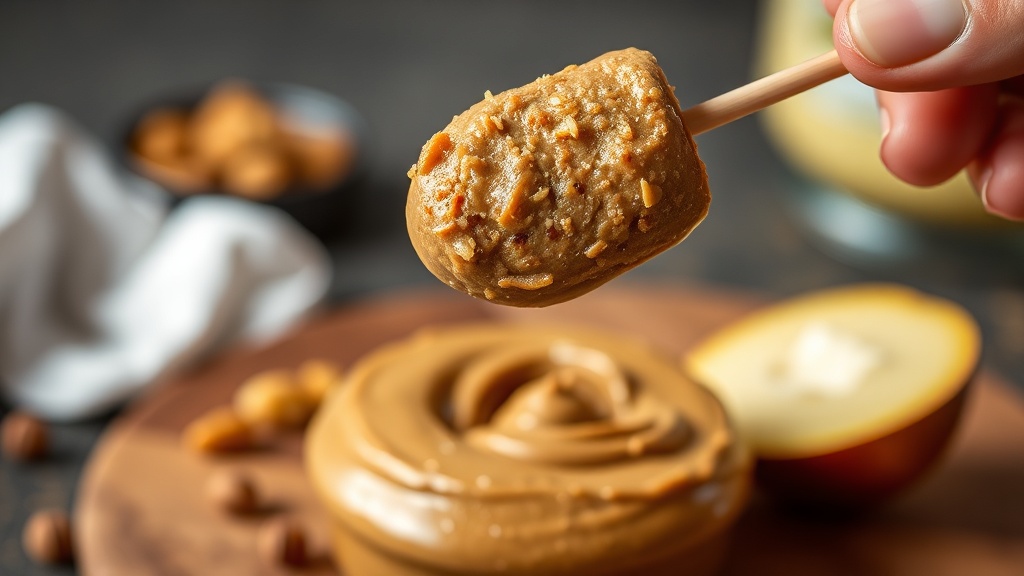
Keep Your Nut Butters Smooth with a Simple Skewer

Quick Tip
Use a clean skewer to stir the bottom of the jar to redistribute oils and maintain a smooth texture.
You'll learn how to fix the annoying separation in natural nut butters using nothing more than a simple wooden skewer. If you've ever opened a jar of Justin's Nut Butter or a generic organic peanut butter only to find a layer of hard oil at the top and dry sludge at the bottom, this trick is for you.
Why does natural nut butter separate?
Natural nut butters separate because they lack the emulsifiers—like hydrogenated oils—found in commercial brands. When you store a jar of peanut butter or almond butter, the heavier solids settle at the bottom while the lighter oils rise to the top. It's a natural process that happens with any minimally processed nut product.
While it's perfectly safe to eat, it can be a real pain to stir. You might try using a spoon, but a spoon often just pushes the oil around without actually incorporating the solids back into the paste. (I've tried the spoon method a dozen times, and it rarely works.)
How do you stir nut butter effectively?
A long wooden skewer or a thin bamboo stir stick is the best tool for reintegrating oil into nut butter. By using a thin, sturdy object, you can reach the very bottom of the jar to pull those heavy solids back up into the oil layer.
- The Setup: Open your jar and take out a clean, food-safe wooden skewer.
- The Deep Dive: Insert the skewer all the way to the bottom of the jar.
- The Agitation: Instead of just stirring in circles, use a vertical "folding" motion. Push the skewer down and pull it up through the center to move the solids through the oil.
- The Finish: Once the color and texture look uniform, give it one last quick stir.
This technique works wonders for brands like Barney Butter or even homemade varieties. It's much more efficient than using a knife, which often leaves a messy residue on the rim of the jar.
What is the best way to store nut butter?
Storing your nut butter in a cool, dark place—or even the refrigerator—can help slow down the separation process. If you find the texture becomes too thick or even slightly gritty, you can check the Wikipedia entry on nut butters to understand how different roasting levels affect the final product.
If you're also working with dry ingredients, make sure you aren't letting moisture in. For more on maintaining ingredient quality, check out my tips on storing and preserving your spices.
| Method | Effectiveness | Mess Factor |
|---|---|---|
| Standard Spoon | Low | High |
| Wooden Skewer | High | Low |
| Electric Mixer | Very High | Extremely High |
Don't bother with a blender or an electric mixer unless you want oil splattered all over your kitchen counters. Stick to the skewer—it's fast, cheap, and actually works.