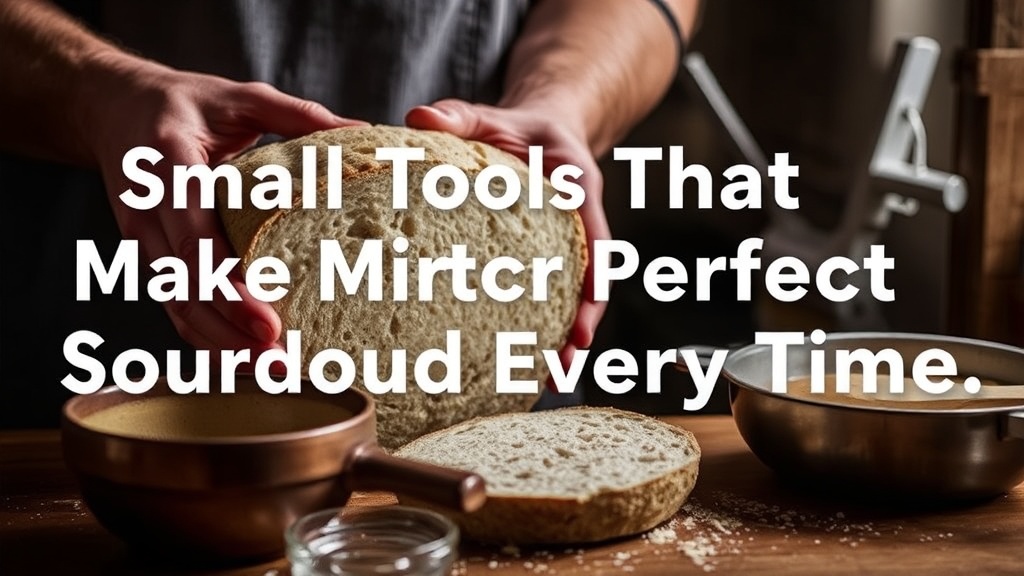
Small Tools That Make Perfect Sourdough Every Time

The Precision Bread Lame
Banneton Proofing Baskets
Digital Scale for Precision
Bench Scrapers for Dough Handling
A baker pulls a loaf from the oven, only to find the crust is soggy and the center is gummy. They check the recipe, the temperature, and the hydration levels, but nothing seems to align. The problem isn't the flour or the starter—it's the lack of precision in the tools used during the process. This article examines the specific, small-scale tools that control the variables of temperature, moisture, and timing to ensure a consistent, professional-grade sourdough loaf.
What Are the Best Tools for Sourdough Baking?
The best tools for sourdough baking focus on precision and heat retention, specifically digital scales, high-quality bench scrapers, and heavy-duty Dutch ovens. While you can bake bread with just a bowl and a spoon, you'll find that precision is what separates a "good" loaf from a "world-class" loaf. It’s about controlling the environment around the dough.
If you're just starting, you might think a standard kitchen scale is enough. It isn't. For sourdough, you need a scale that measures in grams with high sensitivity. A single gram of salt or water can change the way your gluten develops. I've seen people try to use volume-based measurements, but that's a recipe for disaster. Volume is inconsistent; weight is absolute.
The Digital Scale: Your Most Important Investment
Don't use measuring cups for sourdough. Period. A digital scale allows you to track the hydration levels of your dough with surgical accuracy. If your recipe calls for 350g of water, you need exactly 350g. Using a cup is a guessing game that often leads to a dough that's too wet to handle or too dry to rise properly.
I recommend the Oxo Good Grips Digital Food Scale. It’s simple, reliable, and has a tare function that actually works. Being able to zero out the weight of your mixing bowl is a small thing, but it saves a lot of mental energy when you're deep in a long fermentation process.
The Bench Scraper: Managing Sticky Dough
Handling high-hydration sourdough can be a nightmare if you don't have the right metal. A bench scraper is a flat, stainless steel tool used to manipulate dough on a work surface. It helps you fold, divide, and clean up the workspace without the mess. It’s also great for moving dough from a bowl to a proofing basket without tearing the delicate gluten structure.
You can find many cheap versions, but look for one with a heavy handle. A flimsy plastic version will bend when you're trying to scrape a stubborn piece of dough off a counter. This is one of those instances where the hidden power of small kitchen gadgets becomes obvious. A tool that costs $10 can save you from a ruined batch of dough.
How Much Does a Sourdough Starter Kit Cost?
A basic sourdough starter kit typically costs between $50 and $150 depending on whether you buy specialized gear or use what you already own. You don't need to spend a fortune to get started, but skipping certain tools will definitely make the process harder.
| Tool Type | Purpose | Estimated Price Range |
|---|---|---|
| Digital Scale | Precise weight/hydration | $15 - $40 |
| Digital Thermometer | Water/Dough Temperature | $10 - $25 |
| Banneton Basket | Shaping/Final Proof | $15 - $30 |
| Lame (Razor Tool) | Scoring the Dough | $10 - $20 |
| Dutch Oven | Steam/Heat Retention | $40 - $150 |
If you're on a budget, prioritize the scale and the thermometer. You can use a regular bowl for proofing, but you can't "eye-ball" the temperature of your water or the weight of your flour. Temperature is a huge variable in sourdough. If your water is too hot, you'll kill your yeast; too cold, and the fermentation will stall. A Thermapen or a basic digital probe thermometer is a lifeselect tool here.
The Role of the Digital Thermometer
Sourdough is a living thing. It reacts to every degree of temperature change. If you're using a recipe that calls for a specific water temperature, you need to be certain. A thermometer helps you track the "ambient" temperature of your dough as it ferments, which tells you when it's actually ready for the oven.
The Banneton: Why Shape Matters
A banneton is a woven basket used to support the dough during its final proof. It provides structure and helps create those beautiful, concentric rings on the crust. While you can use a bowl lined with a linen towel, a dedicated rattan basket ensures the dough doesn't flatten out during the final rise. It keeps the tension high and the shape intact.
How Do You Create Steam in a Home Oven?
You create steam in a home oven by using a Dutch oven or by adding water to a hot cast-iron pan. Most home ovens are "dry" environments, which is the enemy of a good crust. Without steam, the crust sets too quickly, preventing the bread from expanding (the "oven spring").
The most reliable method is the Dutch oven method. By baking the dough inside a heavy, lidded pot, you trap the moisture evaporating from the dough itself. This creates a micro-environment of steam that keeps the crust soft for the first half of the bake. This allows the bread to expand fully before the crust hardens. If you don't have a Dutch oven, a Dutch oven is the gold standard for home bakers.
- The Dutch Oven Method: Place dough in a preheated pot with a lid. The lid traps the steam.
- The Baking Stone Method: Place a stone in the oven and drop ice cubes or water into a separate pan at the bottom.
- The Steam Tray Method: Use a heavy-duty baking sheet and pour boiling water into it right as you slide the bread in.
I've found the Dutch oven method to be the most consistent. It's hard to mess up. If you use a baking stone, you have to be much more careful about timing. If you wait too long to add the water, the steam escapes before the bread is fully developed. It's a high-stakes game of timing.
The Lame: Precision Scoring
A lame is a specialized razor used to score the top of the dough. It's not just for looks. A deep, precise cut allows the bread to expand predictably. If your score is too shallow, the bread might burst in weird places. If it's too deep, it might collapse. Using a professional tool like a Channel Blade Lame ensures you can control the direction and depth of your cuts.
It's a small tool, but it's the difference between a loaf that looks like a generic blob and one that looks like a professional masterpiece. You can use a standard razor blade, but a dedicated lame provides better ergonomics and more control over the angle of the cut.
The Importance of Temperature Control
Temperature isn't just about the oven. It's about the dough itself. A high-quality digital thermometer allows you to ensure your water is in the "sweet spot"—usually around 80°F to 85°F for most sourdough recipes. This ensures the yeast is active but not overwhelmed. It's a subtle nuance, but it's what makes the difference in how much the dough rises.
If you're curious about the science of how temperature affects fermentation, you can look into food safety and temperature guidelines, though sourdough is a much more artisanal process than standard food safety. It's about optimizing the biology of the dough.
A well-equipped kitchen doesn't need to be filled with expensive gadgets. It just needs the right ones. For sourdough, that means tools that prioritize precision over everything else. A scale, a thermometer, and a sturdy pot will get you 90% of the way there. The rest is just practice and patience.