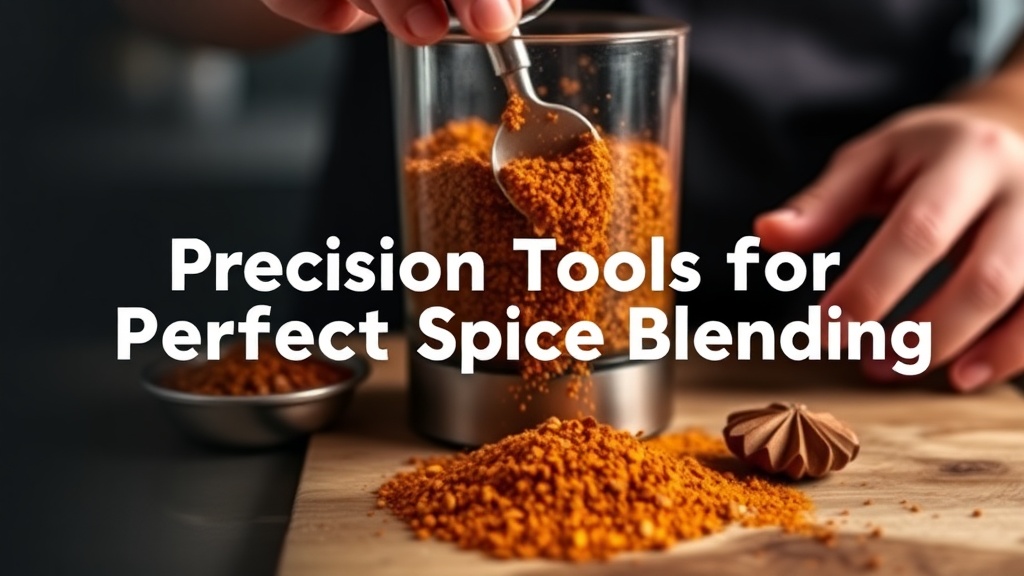
Precision Tools for Perfect Spice Blending

The Traditional Mortar and Pestle
Electric Spice Grinders for Uniformity
Microplane Zesters for Fresh Aromatics
Stainless Steel Spice Infusion Jars
The scent of toasted cumin and crushed peppercorns hangs heavy in the air, a sharp contrast to the sterile, unflavored powders found in pre-packaged supermarket jars. Achieving a professional-grade spice blend requires more than just throwing ingredients into a bowl; it demands control over particle size, texture, and volume. This guide breaks down the specific tools you need to move beyond basic seasoning and start creating custom blends with absolute precision.
If you've ever tried to make a custom garam masala or a precise chili rub, you know the frustration of uneven textures. One spoonful is a powder, the next is a gritty chunk of cinnamon. That's where the right gear comes in.
What Are the Best Tools for Grinding Whole Spices?
The best tool for grinding whole spices depends entirely on the volume of spice you're working with and the desired texture. For small-batch, high-precision work, a Mortar and Pestle remains the gold standard because it allows you to feel the resistance of the spices as they break down.
If you're looking for speed and consistency, an electric spice grinder or a high-speed blender is a better bet. However, there are trade-offs with each. I've spent way too much time trying to grind star anise in a cheap coffee grinder (it's a mess), so listen to these distinctions.
- Granite Mortar and Pestle: Best for heavy-duty grinding of tough spices like peppercorns or cardamom pods. The weight of the stone does the work for you.
- Ceramic Mortar and Pestle: Great for finer, more delicate grinding. It's easier to clean than granite, but it can crack if you're too aggressive.
- Electric Spice Grinder: Ideal for large quantities of dried herbs or cinnamon bark. Brands like Hamilton Beach make decent entry-level models that get the job done without breaking the bank.
- Microplane Zester: Not just for citrus. Use this to turn a nutmeg seed or a single clove into a fine, dust-like powder instantly.
A quick tip: if you're using an electric grinder, don't run it continuously. The heat from the blades can actually cook the volatile oils out of your spices, leaving you with a dull flavor. Pulse it instead.
How Do I Measure Spices Accurately for Large Batches?
You must use digital scales that measure in increments of 0.1 grams to ensure your spice blends remain consistent every time you make them. Volumetric measurements—like "one teaspoon"—are notoriously unreliable because the density of spices changes based on how tightly they are packed into the spoon.
I've noticed a huge difference in my rubs when I switched from spoons to a scale. It's much more predictable. If you want to get serious, look into the physics of mass and weight to understand why volume is a lie in the kitchen.
For those who are serious about precision, a high-quality scale is non-negotiable. Here is a comparison of how different tools handle spice measurements:
| Measurement Tool | Best Use Case | Precision Level | Pros/Cons |
|---|---|---|---|
| Digital Gram Scale | Large-scale blending | High | Very accurate; requires a flat surface. |
| Measuring Spoons | Quick, single-use seasoning | Low | Fast; inconsistent density. |
| Micro-scales (Jeweler style) | Highly potent spices (Saffron/Cayenne) | Extreme | Perfect for tiny, expensive amounts. |
When you're working with something as expensive as saffron, a standard kitchen scale won't cut it. You'll need something that can detect tiny fractions of a gram. It's an investment, but it pays off when you aren't wasting expensive ingredients.
Can I Use a Coffee Grinder for Spices?
Yes, you can use a coffee grinder for spices, but you should never use the same machine for both coffee and your seasonings. The oils from spices like cumin or turmeric will linger in the blades and the crevices, potentially ruining the flavor profile of your next batch of coffee beans.
If you decide to go this route, buy a dedicated unit. I have a small Bodum grinder that is strictly for spices. It keeps my morning espresso tasting like coffee and not a hint of curry. It's a small price to pay for sanity.
The texture of the grind is also a factor. A coffee grinder is designed to create a uniform particle size, which is great for a fine powder, but it might be too aggressive if you're looking for a coarse, textured rub. If you want a more textured finish, you might find that small tools that control texture—like a coarse sieve—are actually more useful for the final step.
The catch is the residue. Spices like turmeric will stain everything. If you use a plastic grinder, the yellow pigment will likely live there forever. Stainless steel is your friend here. It's easier to wipe down and much more durable.
The Importance of Sifting
Once you've ground your spices, you need to sift them. This isn't just about aesthetics. Sifting removes the "oversized" bits that didn't get pulverized, ensuring your spice blend is perfectly smooth. This is especially important if you're making a fine seasoning for a delicate sauce or a professional-grade curry powder.
A fine-mesh stainless steel sieve is the tool of choice. You can find high-quality versions from brands like Vitamix or even standard professional kitchen suppliers. It allows you to separate the fine dust from the larger chunks of bark or seed.
I often find myself using a sieve to check the consistency of my blends. If there are still large pieces, I put them back in the grinder. It's a repetitive process, but the result is a professional-grade product that doesn't have any unexpected "crunch" in the middle of a smooth sauce.
Storing Your Blends
Precision doesn't end with the grind. If you store your spices in cheap, flimsy plastic containers, you're wasting your time. The oils will oxidize, and the flavor will vanish within weeks. To keep your hard work from going to waste, use airtight glass jars.
Glass is non-reactive and won't absorb odors. This is especially important if you're making something like a high-heat chili blend. A good storage setup includes:
- Amber Glass Jars: The dark color protects the spices from light degradation.
- Airtight Lids: Look for gaskets that actually seal tightly.
- Labeling System: Always include the date the blend was made.
If you're experimenting with oils and spices together, you'll want to look into creating your own infused finishing oils to see how these spices behave in a liquid medium. It's a great way to extend the life and flavor of your blends.
Precision is a habit, not just a one-time event. Whether you're using a heavy stone mortar or a high-speed electric grinder, the goal is the same: total control over the ingredient. When you control the texture, you control the flavor. And when you control the flavor, you can truly master the kitchen.